
Belts and Hoses Service in Arvada, Colorado
Belt and Hose Diagnosis and Replacement Near Me
Belts and hoses may not get much attention until one of them fails, but they play a critical role in keeping your engine running and properly cooled. A single failed belt or hose can leave you stranded, and in some cases can cause serious engine damage if not addressed quickly.
These components are made of rubber and are exposed to constant heat, movement, and fluid contact, all of which cause them to wear out over time even without an obvious sign of damage.
Belt and Hose System Components
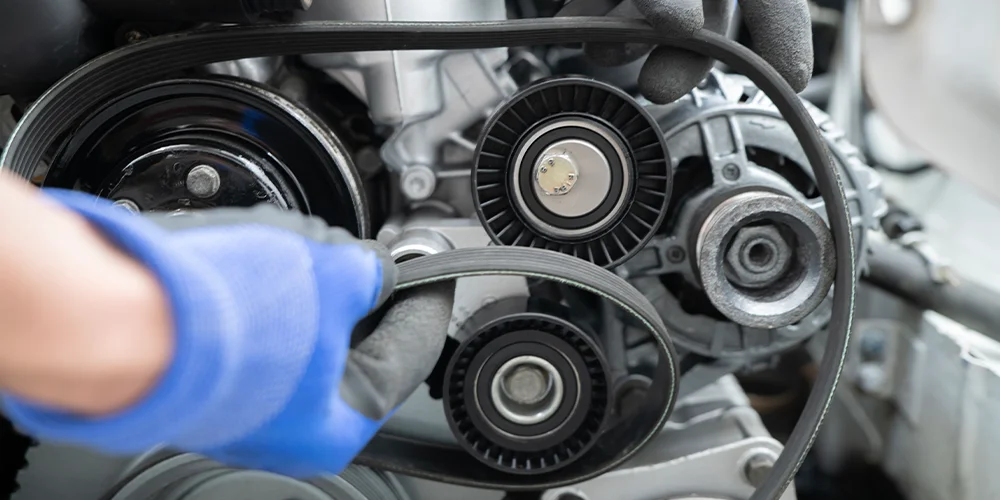
Serpentine Belt Drives multiple engine accessories, including the alternator, power steering pump, and air conditioning compressor.
Timing Belt (Certain Vehicles) Keeps the engine’s camshaft and crankshaft rotating in sync, critical to proper engine operation.
Radiator Hoses Carry coolant between the engine and radiator to keep the engine at a safe operating temperature.
Heater Hoses Carry hot coolant to the heater core, allowing your vehicle’s heater to function.
Common Belt and Hose Problems
Cracking or Glazing Rubber belts and hoses become brittle and cracked over time, increasing the risk of failure.
Squealing Noises A squealing sound from the engine bay often points to a worn or slipping belt.
Coolant Leaks A cracked or loose hose can leak coolant, leading to engine overheating if not caught early.
Bulging or Soft Spots Hoses that feel soft or show bulging are at risk of bursting and should be replaced before they fail.
Why Arvada Square Auto?
We inspect belts and hoses as part of routine service, since these are components that fail without much warning. Catching wear early is one of the simplest ways to avoid being stranded or facing a much larger repair from an overheated engine.


Belts and Hoses FAQs
Q: What are the warning signs of a bad belt or hose?
A: Look for cracking or glazing on belts, squealing from under the hood, coolant leaks, and hoses that bulge or feel soft. Any of these means a part is wearing out and should be checked.
Q: Why is my engine squealing?
A squeal from the engine bay often means a worn or slipping belt, usually the serpentine belt. Left alone, it can break and leave you without charging, power steering or A/C.
Q: What does the serpentine belt do?
The serpentine belt drives your alternator, power steering pump and A/C compressor. If it fails, your battery stops charging and the car can quickly become undrivable.
Q: Does my car have a timing belt, and why does it matter?
Some vehicles use a timing belt to keep the camshaft and crankshaft in sync, while others use a timing chain. On many engines a broken timing belt causes serious engine damage, so follow the replacement interval in your owner’s manual or ask us to check.
Q: Can belts and hoses wear out even if they look fine?
Yes. Heat, constant movement and fluid exposure break them down over time, even without visible damage. That’s why we inspect belts and hoses during routine service, before they leave you stranded.