
If your car pulls to one side while driving, you may find yourself constantly correcting the steering wheel to stay in your lane. This behavior can make driving tiring and may signal a problem with your tires, wheel alignment, brakes, or suspension.
A vehicle that drifts slightly on a sloped road may simply be responding to the road surface. A consistent pull on a relatively level road, however, deserves attention. Identifying when the pulling occurs can help narrow down the cause and determine what repairs your vehicle needs.
How to Tell If Your Car Has an Alignment Problem
Wheel alignment refers to the angles of your vehicle’s wheels relative to the road and each other. When these angles fall outside manufacturer specifications, the car may pull to one side, the steering wheel may sit off-center, or the tires may wear unevenly.
Alignment problems commonly develop after hitting a pothole, striking a curb, or driving over rough roads. Worn suspension components can also prevent the wheels from maintaining the correct alignment.
Common signs of poor wheel alignment include:
- The car consistently drifts left or right.
- The steering wheel sits crooked when driving straight.
- The front tires show uneven wear.
- The vehicle feels less stable at highway speeds.
- The steering wheel does not return to center normally.
A professional wheel alignment service measures the suspension geometry and adjusts the angles according to the manufacturer’s specifications. However, alignment adjustments will not correct every cause of pulling. A technician should inspect the tires and suspension components before making adjustments.
Could Your Tires Be Causing the Problem?
Tires are another common reason a car pulls to one side. Differences in tire pressure, tread wear, tire construction, or rolling resistance can affect how a vehicle tracks on the road.
Start by checking tire pressure. If one front tire has significantly less air than the other, the vehicle may pull toward that side. Use the pressure listed on the driver’s door-jamb label rather than the maximum pressure printed on the tire sidewall.
Uneven tread wear can also change how the tires contact the road. A damaged tire, internal belt separation, or mismatched tires may create pulling that remains even after an alignment.
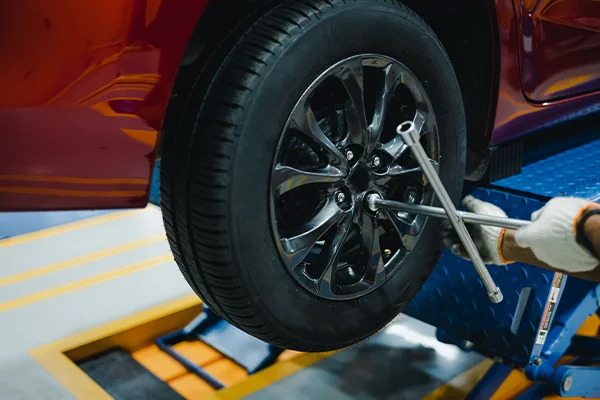
Another possible cause is tire conicity, which occurs when a tire’s construction causes it to generate a sideways force as it rolls. This can make a car drift even when the alignment readings are within specification.
A repair technician can inspect the tires, verify pressures, measure tread depth, and determine whether a tire-related issue is responsible. Tire rotation or replacement may help, depending on the condition and type of tires involved.
Do not continue driving on a tire with a bulge, exposed cords, or suspected internal damage. These conditions can indicate a serious tire failure risk.
Does Your Car Pull When You Apply the Brakes?
If the vehicle tracks straight during normal driving but pulls sharply when you press the brake pedal, the braking system deserves particular attention.
A sticking brake caliper can cause one wheel to slow more aggressively than the others. A restricted brake hose, uneven braking force, contaminated friction material, or damaged braking components may also contribute to the problem.
Signs of a brake-related issue can include:
- Pulling that occurs mainly during braking
- A burning smell near one wheel
- Unusual heat from a wheel area
- Grinding, squealing, or other abnormal brake noises
- A steering wheel that shakes while slowing down
A dragging brake may generate substantial heat and accelerate wear. If the vehicle pulls hard, produces smoke, or develops a strong burning odor near a wheel, stop in a safe location and arrange a professional inspection.
Avoid touching brake rotors or wheels to check their temperature. Brake components can become hot enough to cause serious burns.
What If the Problem Comes From the Suspension?
Worn suspension or steering parts can create pulling even when the tires and alignment appear acceptable. Damaged control arm bushings, worn ball joints, loose tie rods, or a failing wheel bearing may affect how the wheels respond to road forces.
A technician may need to inspect these components before deciding whether an alignment will solve the problem. Adjusting alignment without correcting loose or damaged parts can lead to recurring tire wear and poor handling.
How a Professional Inspection Helps
The best repair depends on the underlying cause. Replacing tires will not correct a sticking brake caliper, and an alignment will not repair a damaged suspension component.
A qualified technician can road-test the vehicle when appropriate, inspect the tires and steering system, measure alignment angles, and evaluate brake operation. This process helps avoid unnecessary repairs while restoring predictable handling.
Vehicle Inspection & Diagnostics in Arvada, Colorado
A car that pulls to one side can be uncomfortable to drive and may become unsafe if the problem involves the brakes, tires, or steering system. Addressing the symptoms early can help prevent uneven tire wear and more extensive repairs.
If your vehicle drifts, pulls during braking, or has developed an off-center steering wheel, schedule an inspection with the experienced team at Arvada Square Auto in Arvada, Colorado. Our technicians have the training and tools needed to provide your vehicle with the utmost quality of diagnostics, care, and repair!