
It was a cold winter morning in Arvada, Colorado, and the house was just starting to wake up. A young man sat at the kitchen table finishing breakfast while his mom moved quickly through the house getting ready for the day. She had raised him on her own, and over the years, he learned what it meant to be someone his mom could depend on.
“Hey, can you run to the store for me?” she asked, holding up a short list of items.
He didn’t hesitate. “Yeah, I got it.”
He grabbed the shopping list and flew out the door.
There was pride in that moment. Being dependable. Being someone she could count on.
He stepped outside, climbed into his car, and turned the key.
Click. Click.
A car that clicks but won’t start is one of the most common signs of a dead car battery, this is often caused by low battery voltage or reduced Cold Cranking Amps, especially in cold weather.
He paused, staring at the dashboard. No crank. No start.
A dead battery.
For a split second, frustration crept in. But just as quickly, something else took over.
“Slow down. Positive first. Take your time and do it right.”
He nodded. “Alright… I got this.”
Understanding Battery Life Expectancy
Most car batteries last between 3 to 5 years depending on driving habits, climate, and maintenance. In Colorado, cold weather reduces battery output while heat accelerates wear.
Cold weather is one of the most common reasons drivers search “car won’t start in cold weather Colorado,” and in many cases, the battery is the root cause.
Common signs of failure include slow cranking, dim lights, repeated jump starts, and aging batteries.
How to Extend Your Car Battery Life
Battery failure is not always sudden. In many cases, it is the result of small habits over time.
Simple steps can make a big difference:
- Avoid short trips that do not fully recharge the battery
- Keep terminals clean and free of corrosion
- Turn off lights and accessories when the vehicle is not running
- Have your battery tested regularly, especially before winter
Cold weather makes battery maintenance even more important. A weak battery that might survive in warm conditions can fail quickly when temperatures drop.
For more practical tips on extending battery life, check out this guide:
https://www.jalopnik.com/2062535/tips-extend-car-battery-lifespan/
How to Properly Jump Start a Car
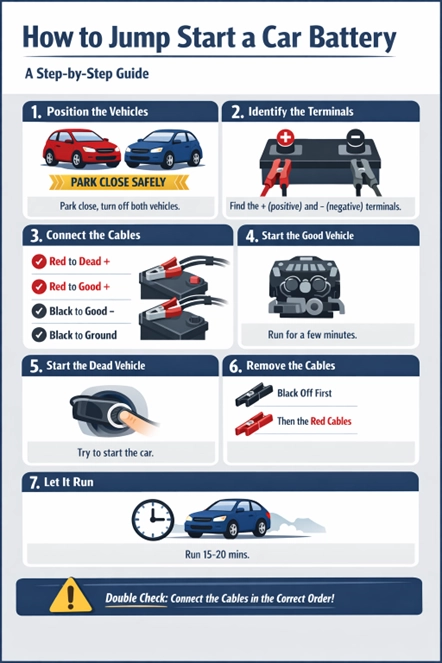
Position the Vehicles
Park the vehicles close enough for the jumper cables to reach, but make sure they are not touching. Turn both vehicles off.
Identify the Battery Terminals
Locate the positive (+) and negative (−) terminals on both batteries. The positive terminal is typically marked in red.
Connect the Jumper Cables in the Correct Order
- Red to dead battery (+)
- Red to good battery (+)
- Black to good battery (−)
- Black to a clean, unpainted metal ground on the dead vehicle
Start the Working Vehicle
Let the working vehicle run for a few minutes to begin sending power to the dead battery.
Start the Dead Vehicle
Attempt to start the vehicle. If it does not start right away, wait another minute or two and try again.
Remove the Cables in Reverse Order
- Remove the black cable from the grounded metal surface
- Remove the black cable from the good battery
- Remove the red cable from the good battery
- Remove the red cable from the previously dead battery
Let the Vehicle Run
Allow the vehicle to run for at least 15 to 20 minutes or take it for a drive to help recharge the battery.
Important:
Following this sequence helps prevent sparks and keeps any potential ignition away from battery gases. Incorrect connections can cause serious damage to fuses, alternators, and sensitive electrical components.
Real World Example: Subaru Forester Battery Failure
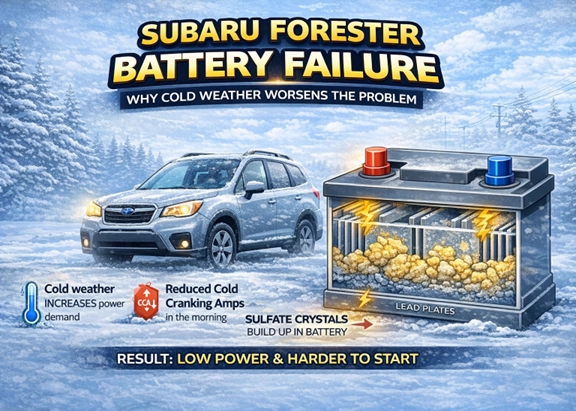
A Subaru Forester came in with a no-start condition during a cold morning in Arvada.
Symptoms:
- Click, click
- Lights on, but no crank
- Slower starts leading up to failure
The battery showed normal voltage but failed under load.
What Happened
Cold weather increased the demand on the battery while reducing its output.
At the same time, sulfation had built up inside:
- Lead plates developed hardened sulfate crystals
- Electrical flow became restricted
- Cold Cranking Amps dropped below usable levels
So, while the battery looked fine, it could not deliver enough power to start the engine.
For a deeper breakdown of how cold temperatures impact battery performance, check out this guide: https://www.hotchkissauto.com/blog/battery-trouble-in-cold-weather
The Fix
A proper battery test confirmed low Cold Cranking Amps.
The team at Arvada Square Auto replaced the battery with a high-quality unit backed by a 40 month warranty, providing extra reassurance and reliable starting power in Colorado’s cold climate.
Back to the Driveway
The engine turned over strong. Relief.
He closed the hood and headed off to complete his errands.
On the way, he stopped at Arvada Square Auto for a professional battery test and replacement.
Because being dependable is not just about showing up, it is about being ready before the next time you turn the key.